
How to handle late tuition payments at a home daycare
A calm, three-step approach. a written policy, an automatic reminder, and one conversation script that keeps families on your side.
Late payments are the most common money problem small programs face, and almost none of them come from families who don’t intend to pay. Most come from a policy that was never written down, a reminder that never went out, and a conversation nobody wanted to have. By the time you’re texting a family asking where the check is, the relationship has already taken a small hit, and it didn’t need to.
The fix isn’t a stricter policy or a bigger late fee. It’s removing yourself from the three moments where things usually go wrong: the family never being told the rule clearly, nobody reminding them before the due date, and you being the one who has to bring it up after the fact.
1. Put the policy in writing before you need it
Your enrollment packet should state the due date, the grace period, the late fee, and what happens after fourteen days. Keep it to five sentences. Families sign it once, and from then on the policy, not you, is the one asking for the money.
- Tuition is due Friday for the following week.
- A $15 late fee applies after Monday at 6 PM.
- Care pauses after two missed weeks until the balance is settled.
Write it before your first late payment, not after. A policy introduced retroactively, aimed at one specific family, reads as personal even when it isn’t. A policy every family signed at enrollment reads as normal, because it is.
2. Let the reminder do the awkward part
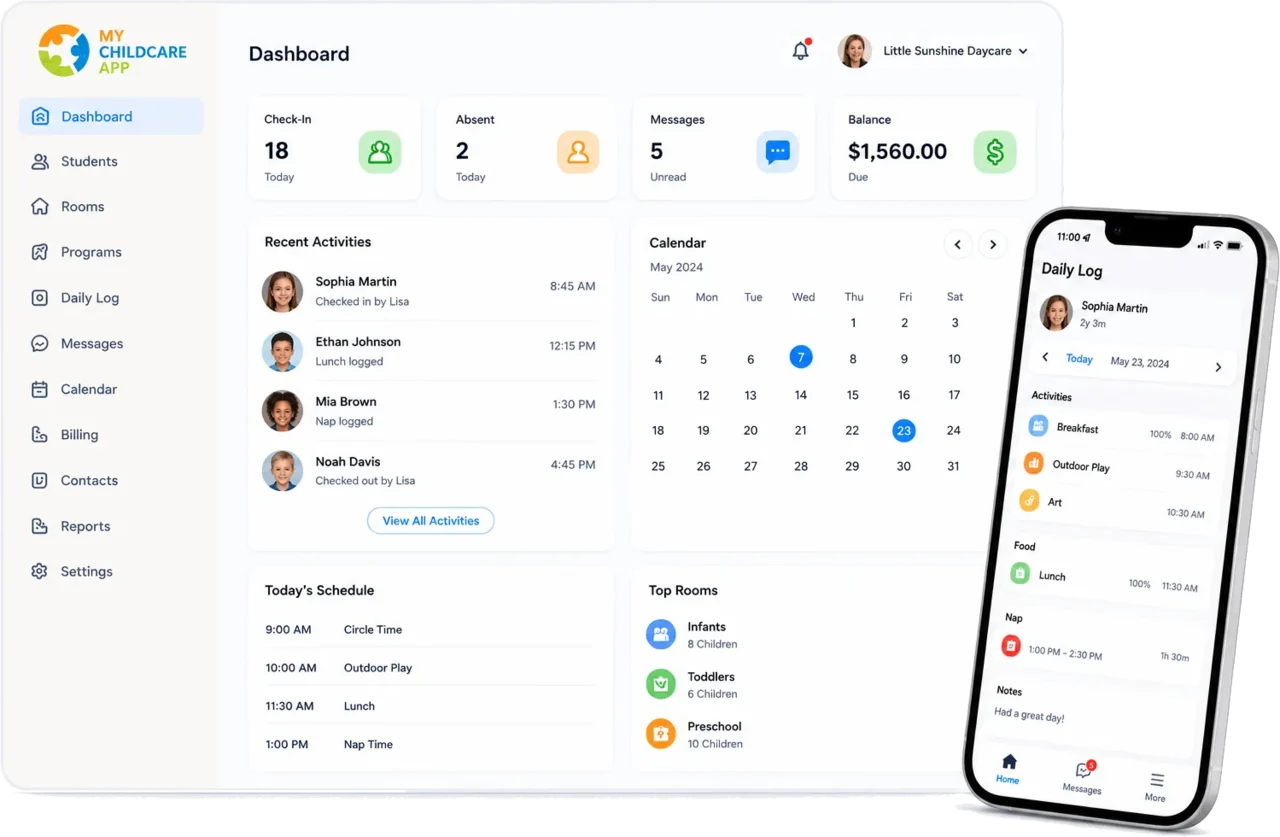
An automatic reminder the day before tuition is due removes the guesswork. When the reminder arrives from the app instead of from you, a late payment becomes an oversight to fix rather than a favor to ask. Most families who pay late aren’t testing you. They forgot, or they meant to transfer the money over the weekend and didn’t get to it. A reminder catches that group before it ever becomes a conversation.
3. Have one short, kind conversation
For the smaller group who are still behind after the grace period, talk at pickup, not by text. A text reads as a bill. A short conversation, in person, reads as someone who noticed and cared enough to ask.
Lead with the assumption that something changed, not that they’re avoiding you. “I noticed last week’s tuition hasn’t come through. Is everything okay?” opens the door to an honest answer, whether that’s a lost card, a job change, or a simple oversight, and it lets you offer the two options your policy already allows: pay now, or set up a short plan.
Handled this way, most late payments resolve the same day, and the family leaves feeling looked after rather than chased. The families who never respond to a warm check-in are rare, and they’re the ones the fourteen-day pause exists to protect you from.